The One Thing Every Trusted Advisor Relationship Has in Common
Ask anyone who has tried to plan a complicated trip using nothing but the internet, and they will tell you the same thing: the information is out there, but knowing what to do with it is an entirely different skill.
The same is true in IT.
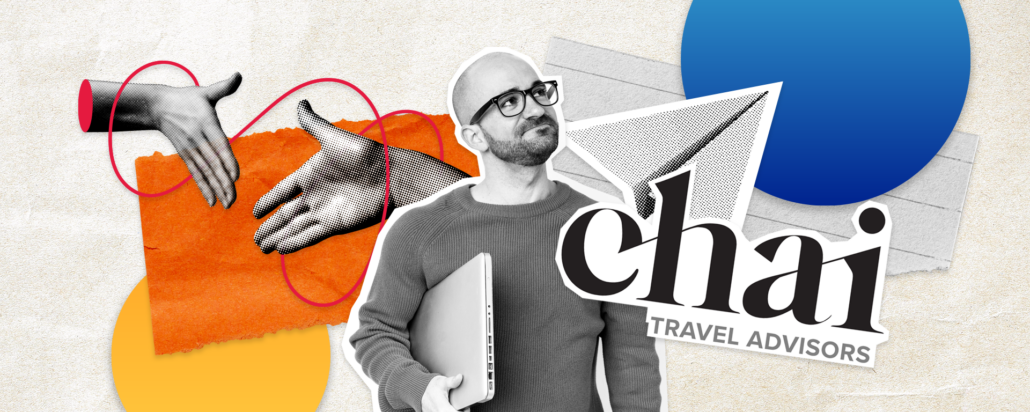
On a recent episode of The Creative Stack, Georg sat down with Mike Liben, founder and CEO of Chai Travel and a longtime neighbor of Valiant’s Manhattan office, to talk about an industry that, on paper, has nothing to do with managed IT services. Travel advisory and IT support don’t share a supply chain, a regulatory framework, or even a customer base. But the longer the conversation went, the more the two businesses started to look like mirror images of each other.
Before founding Chai Travel in 2022, Mike spent 12 years as a lawyer, including a stint as a prosecutor in the Brooklyn District Attorney’s office. Travel, though, was always the family business. His father grew a two-person agency selling tickets to Tel Aviv into the third largest travel agency in America before passing away in 2020. When it came time for Mike and his sisters to decide what came next, the pull back into the family trade was obvious. He launched Chai Travel in the middle of one of the worst years the travel industry has ever seen and built it back up from there.
From Agent to Advisor
For most of the industry’s history, Mike explained, travel professionals were literally agents of the airlines. Their job was to sell the airline’s product. Over the last decade or so, that relationship has flipped. The industry term has shifted from “travel agent” to “travel advisor,” and the distinction isn’t just semantic. An advisor’s first obligation is to the client, not to the supplier.
Managed IT has gone through the same evolution. The old break-fix model put providers in a similar position to old-school travel agents: paid when something happened, with no particular incentive to prevent problems in the first place. The modern MSP model exists because businesses need someone whose incentives are aligned with keeping things running, not just fixing what breaks.
The Fundamentals Don’t Change
Mike has watched the travel industry go through booking technology shifts, airline consolidation, a global pandemic that took travel volume down 80 to 90 percent overnight, and now a wave of AI tools promising to automate the entire trip-planning process. Through all of it, one thing has stayed constant: the relationship between an advisor and a client isn’t something a search engine can replicate.
That tracks with what we see in IT. The tools change every five to ten years. Trust and judgment are what actually get people through the change.
Vetting an Advisor, Whether They Book Flights or Manage Firewalls
One of the more useful parts of the conversation was Mike’s advice for anyone evaluating a professional they haven’t worked with before, travel or otherwise. Before committing to anything, you should walk away from that first conversation understanding three things: what they’re going to do for you, how they’re going to do it, and what it’s going to cost. Asking about upfront fees, scope, and specialization isn’t rude. It’s basic due diligence.
Mike also flagged a red flag worth watching for on both sides of the table: prospects who want to extract all of an advisor’s ideas and expertise without any real intention of working together. It wastes the advisor’s time, and it rarely serves the client either, since a plan built on secondhand advice from someone with no ongoing stake in the outcome tends to fall apart the moment something unexpected happens.
AI Is the Assistant, Not the Advisor
Mike doesn’t see AI as a threat to the advisor relationship, but he’s clear-eyed about where it actually helps. His advice: don’t ask AI to replace the core of what you do well. Ask it to take the three or four most annoying, repetitive tasks off your plate instead.
That’s close to the crawl, walk, run approach we take with clients here. Start with the smallest, most repeatable task in your day and let a tool handle it consistently. Machines are good at consistency in a way humans generally aren’t. What humans are good at is making people feel taken care of when something goes wrong, and that isn’t something either of our industries expects to automate away anytime soon.
It’s Never an “If.” It’s a “When.”
The story that stuck with us most was about a client stranded in Israel with grounded flights and no way out. Getting her home took a full team effort: longstanding relationships with travel contacts on the ground, an overland route through Jordan, and an escort arranged through former military contacts to make sure she felt safe the entire way.
It’s a dramatic example, but the underlying lesson is one we repeat constantly in IT: it’s never a question of if something will go wrong. It’s a question of when, and whether you’ve built the relationships and the contingency plans before you need them.
The Advisor Relationship, Wherever You Find It
Whether the deliverable is a boarding pass or a patched server, the businesses that earn long-term trust are the ones that treat the relationship as the product, not just the transaction. Technology will keep changing on both sides of that equation. The advisor who knows you, and who you can call when something goes sideways, won’t.
The Creative Stack is produced by Valiant Technology, a managed IT services provider based in New York specializing in serving creative agencies and PR firms. Listen to episodes at podcast.thevaliantway.com and learn more at thevaliantway.com.